Add some fun, fizz and aroma to your bath time whilst learning a new craft

100_1038 (1)
Cheeky Suds makes vegan-friendly, unusual and fun bath and body cosmetics, and was started by Chloe Morais from Brixton.

At Making Uncovered on 20 April Chloe will be showing how to make body products and teaching a workshop. 

What do you like about your craft – and how did you get into it?

I started working on body products because I wanted a change of career and longed to do something more creative than what I was previously doing.

The thing I love about cosmetics is that it gives me a chance to be creative in terms of design, fragrances and product ranges. I can make anything, from soaps, lip balms and body scrubs to bath melts, creamers and soufflés. The possibilities are endless so I can always explore and add new products to my range.

I recently made soap for my brother that smells of freshly mown grass because he loves the smell. Chocolate is another favourite!

Why are you taking part in Making Uncovered?

I’m taking part because I’d like to share my craft and creativity with people who might not otherwise have the opportunity to try it for themselves. It’s also a nice way to meet lots of other crafts and local people and give something back to the community.

What will you be teaching at your workshop?

I am doing a workshop on making bath bombs. If you want to add some fun, fizz and sweet aroma to your bath time whilst learning a new craft, then my workshop will be a great place to be!

Bath bombs make bathing fun and fizzy – and smell lovely. They also make a fantastic gift to give to someone else.

Chloe’s workshop is at 11am at Making Uncovered / Brixton East Gallery, lasts 1.5 hours and costs £15. There are 6 spaces. The price includes ingredients and packaging, and you’ll be able to take everything home with you. You can book your space on Eventbrite: http://makinguncoveredworkshops.eventbrite.co.uk/

‘Drawing is a way of calming my mind. It’s like meditation’

Elena Blanco is a Spanish-born artist living in Loughborough Junction. At Making Uncovered on 20 April, she will be popping up different points throughout the day drawing and engaging with the public.

What do you like about your art? Why did you get into it? 

I have always enjoyed being creative and had lots of ideas. I studied architecture and that gave me drawing and design skills – but I didn’t like working as an architect. It was too serious and stressful, and not that creative as in “let yourself go” which is what I like about art (although I still love drawing urban landscapes and buildings).

Drawing is a way of calming my mind, connecting with the world and myself. It’s a bit like meditating. Illustration taps into my imagination, my inner child, and also satisfies my interest in design.

Why are you taking part in Making Uncovered? 

I loved the idea from the beginning: of bringing makers together to display their skills and techniques. I think it will be such an enjoyable event, because making and creating make people so happy. And getting together to make is such a beautiful sharing act. I read an article about traditional Innuit communities, how they all get together in the evenings to make their art. And I have seen that myself in Spain, my grandmother and her mates getting together on chairs outside the front door, to do their sewing and knitting, sharing ideas, doing their gossip. It was beautiful to see and listen to!

What will you be doing at Making Uncovered people and why should they sign up? 

I want to teach people about the joys of making, in my case illustrating and drawing. I want them to see how art is about enjoyment, acceptance, experimenting and practising – nothing else, no good or bad. I’ve got a beautiful quote from Rilke (that amazing poet and person) that inspires me a lot: “Works of art are of an infinite solitude and no means of approach is so useless as criticism. Only love can touch and hold them and be fair with them.”  I’ll teach some very fun techniques that are great icebreakers for people scared of the blank page.

“Art is a powerful learning tool…” Pam Williams at Making Uncovered

Exif_JPEG_PICTUREPam Williams is a Brixton artist who has worked in the UK and internationally, from Europe to the US to Hong Kong painting, drawing and teaching art.  Pam will teach a drop-in drawing workshop at Making Uncovered on 20 April at 11am

PAMCU

Why are you taking part in Making Uncovered? 

I’ve been a professional artist for over 30 years. I’ve loved art from an early age – it was the most enjoyable activity at school for me, always fun, always new and stimulating. So I love to share and teach art skills, whether to children or adults.

I’m taking part in Making Uncovered to support local artists and to help bring the awareness of the importance of drawing to the community. It is a powerful learning tool for us all as we grow in all walks of life.

24935_cardcode---hk4---from-the-peak
From the peak (Hong Kong)

What are your plans for the day?

During my workshop I will be demonstrating and talking about ‘what to look for when we sketch’ – what we need to understand to create a strong foundation for our art.

I’ll also be showing my new spring/summer collection of Brixton T-Shirts and Brixton sketches.


1-BRIX VLLAGE PC COL1(2)
Brixton Village


Letterpress: 15th century art in 21st century London

PricklePress-photo
Rachel Stanners of PricklePress explains her craft and her workshop at Making Uncovered on 20 April.

Tell us about letter-pressing – what do you like about it and what brought you to doing it?

Letterpress dates back to the fifteenth century. It is an old, tactile craft that requires time, focus and skill to design and typeset faultlessly, master the machinery and produce a perfect print. Each piece of card is fed through the press, piled and cut by hand. The result is something you will instantly want to stroke, collect, frame or gift away.

PressBrushes

I took up letterpress printing in 2009 when my partner and I bought a small hand-operated Adana letterpress. Although I found the amount of time and detail that went into every print run exhausting it was always worth the effort!

Until I tried letterpress I had never given so much time to one craft and it’s been rewarding to see my skill improve over the years.

Why are you taking part in Making Uncovered on 20 April?

I’d love to share the craft of letterpress. Some people have heard of letterpress but most don’t understand how it works or why letterpress goods are expensive.

rise and shine

I spend so much time explaining letterpress that when an opportunity came along to actually show people how it works I jumped at the chance. It’s not until you see a letterpress in action that you understand why it’s so special.

What will you be teaching people and why should they sign up?

I am going to be doing a few demonstrations throughout the day but I also want to use this opportunity to make letterpress accessible.

So, I’m giving a couple of people the chance to learn how to letterpress and print their own postcard designs: anything from a fun postcard to save-the-dates, birthday invitations, birth announcements.

knot-1

You can design them yourself, ask me to help or use vintage wooden type to create something truly unique. On the day we will ink up the press and print up to fifty postcards on 100% cotton card.

It will cost between £30-150, depending on the complexity of your design. The price includes all the material costs. There’s only two spaces available so get in quick! Please get in touch before April 10 if you are interested.

To start your letterpress project and book a workshop space at Making Uncovered please contact rachel [at] pricklepress.co.uk

thankyoublue

Try out willow-weaving and make your own plant climber! Naughty Magpie at Making Uncovered


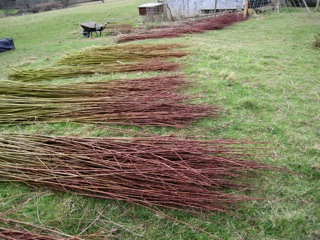
willowyardcutendswhissender

Brixton’s very own willow-weaver Sarah Lovett talks about her craft and her show at Making Uncovered on 20 April.

Tell us about your venture

I am interested in permaculture and sustainability. Four years ago I planted 600 willows in West Somerset. I call my venture Naughty Magpie Willows.

Every year in the winter while the plants are dormant I cut them all down and sort the slender wands into bundles. It is hard work but satisfying.

crop2013

I then have a crop of green willow, which can be planted and grow into structures like tunnels, wigwams and domes. It can also be woven into various useful things for the house and garden.

What will you be showing at Making Uncovered?

I am very pleased to be able to share my skills with you!

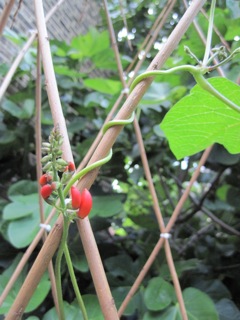
I will be introducing my one of a kind bean climber – an obelisk frame which you can grow lovely orange runner bean flowers up, or clematis, cucumbers or morning glories. It is suitable for the garden, balcony or patio, and helps make the most of a small space to grow vegetables or flowers.

will obs 1

While you are waiting for the plants to grow, you can hang a bird feeder in the top and watch the little birds fertilise your bean plants while they peck the food.

All you need to do is to find a big container, or plant pot, fill it with soil, plant your beans in it and plonk the frame over the top, you might have to tie it on in case its windy. Make sure it is watered and soon you will have a feature covered in free food!

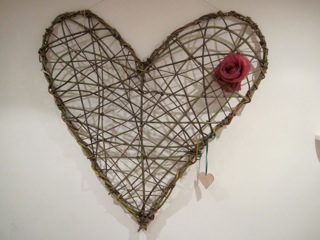
I will also have with me large willow hearts designed to decorate the wall, bringing the outside inside. The hearts look fantastic on a feature wall in the living room, great as a notice board in the kitchen, or a hanger in the hallway.

heartwall

Make your own plant climber!

If you would like to make a plant climber for yourself, or as a present for someone else, book your place at my workshop at Making Uncovered – there are only eight places.

I will demonstrate the easy to follow technique and then you can choose a dozen willow wands and begin to make your own climber with a little help from me. It is a lot of fun. Don’t worry about it being too big to carry, the structure collapses like an umbrella when you take the ring out of the bottom, so you have a long bundle and a ring to carry. More fun on the bus!

This activity is for adults. If you have a pair of secateurs bring them, but I have a few pairs we can use.

You can book your place at the workshop here.

willowbean2

Our writers also show professionalism when it comes to maintaining a proper tone and voice throughout the dissertation. Complete control over this aspect is what separates dissertation writers from essay and term paper writers. You will notice a flow of ideas in your dissertation and arguments will always be logical and sustained.


Makerhood makers at the Crafty Fox Easter Market this Sunday!

Are you going to the Crafty Fox Easter Markets this weekend? Several Makerhood members will be represented on Sunday at this lovely event held at Brixton’s Dogstar.

Screen printers Ray Stanbrook and Kerry Eggleton are well known in south London. Ray creates wonderful mementos of south London spots in his unique graphic style. Several venues around Brixton feature his work – for example, he designed the eye-catching menu for the Ritzy. So this is a chance to get your very own versions of his work.

headerimageray5

Kerry’s designs comment on the urban landscape and contemporary living. Unexpected and beautiful, they mesmerise the longer you look at them! We’re great fans of Kerry’s work that’s been a hit locally – it flew off the shelves at Diverse gift shop in Brixton when it was stocked there for Christmas.

Bull bear

Milliner Jennifer Levet will be selling handmade hats for men and women. Jennifer’s background is in theatrical millinery – she has a weakness for fabric patterns, quirky, geometric and classic fabrics such as houndstooth and tweed. Check out her beautiful work this Sunday.

jennifer levet


You’ll also be able to stock up on natural hair products from Hairy Jayne  – all brewed, mixed and packaged by her own fair hand in her Brixton studio. Hairy Jayne’s hair products merge preparations from traditional apothecaries with more recent formulations. All ingredients are chosen for their hair-friendly qualities!


Hairy

Meet the makers: Jennifer Levet

Milliner Jennifer Levet discusses dressing Disney characters and making hats for opera and film

jennifer levet

1. Have you always been interested in hats?
Not at first! I started out in costume and that led to millinery. I grew up going to sewing clubs and tagging along with my mum to quilting shops. I have always loved pattern and the difference between different qualities of fabric. I studied costume design at Wimbledon College of Art, which included a module with a theatrical milliner. I loved it and I carried on doing other millinery courses after graduation with people like Jane Smith to learn more. It’s addictive, learning all the different skills involved, like blocking felt and strip straw.

2. So did you go straight into millinery after leaving college?
No – I wanted to practise and study all the skills involved properly, and part of my heart was in costume, so I did lots of courses and lots of dressing all over London, for places like the Royal Opera House, the National Theatre and English National Opera. I also spent 14 months working on a Disney cruise ship, looking after the wardrobe for the cast for the on-board theatre and of course one or two Disney characters! The cruises started in Florida and went round the Bahamas and Caribbean. That was a very different world! But these experiences have helped me to do other work better, such as where I’ve been working over the past year, making hats for Welsh National Opera. I understand that how the hats and costumes are worn and needed during the show affects how they are made and how durable and comfortable they are. You also understand more about the individual.

3. What sort of people buy your hats?
I sell through Makerhood and Etsy, but most of my hats are commissions. The work varies – from bridal and casual wear to period millinery. I do quite a bit of freelance theatrical work still: I recently made one for a famous waxworks museum (the display hasn’t opened yet!) and for a workshop at the London Transport Museum. I also help a few other milliners, including Jane Smith. I have helped her make hats for a coronation, Tudor berets for Shakespeare’s Globe and1850s felt toppers for a Charles Dickens movie.
I really love designing casual wear hats that the everyday person can afford, though – I would love to bring affordable, stylish hats back to the everyday person worrying about the pennies in their pocket.

4. What is it about hat making that appeals to you?
I think it’s a fascinating set of skills – working with different materials such as straw, felt and fabric. It’s also an enjoyable intellectual exercise – especially flat patterning [working out how a flat pattern will form a three-dimensional shape when sewn together]. But I still have to remember the rules about how it looks on the head when it’s finished! I can get lost in the jigsaw, designing a flat pattern or how the pieces work together, but at the end of the day it has to be a hat that is stylish and comfortable that someone wants to wear.

5. What are your favourite materials to work with?
I do a lot of felt hats. It’s a very rewarding material to work with. I’ll start with a felt hood that is already made into a cone shape and then steam it for a long time until it suddenly becomes more pliable so I can pull it into shape over a hat block in a crown or brim shape. I either use a wooden block or I carve my own polystyrene blocks, which is a lovely skill in itself – though it’s very messy, as those bits of white polystyrene get everywhere! I also love working with tweeds and interesting patterned fabric. It’s a good excuse to go to quilt shows with my mum and look at interesting fabrics that could be quite versatile, but ultimately produce a lovely finish. I use lots of vintage shades and deep colours but I do have a yellow houndstooth button hat for sale at the moment.

6. Why did you join Makerhood?
I heard about Makerhood through Handpicked Brixton on Facebook, and thought it was right up my street. I like to support local traders who have spent time training in skills and love the idea of connecting them to the community around them. The product photography workshop that you ran was really useful.

7. Finally, what’s your favourite bit of Brixton?
Brixton is the first place I’ve lived where there are three haberdasheries within walking distance of my home! There’s Simply Fabrics on Atlantic Road, Atlantic Silk Fabrics on Electric Avenue, and Morleys. I didn’t find out about the haberdashery section in Morleys for ages – it is very handy. I wouldn’t be surprised if you found me at the Ritzy later in the week either, and I’ve also been in Duck Egg Café twice this week..

You can buy Jennifer’s classic hats with a twist at http://brixton.makerhood.com/jennifer-levet-hats. Jennifer also has a stall at Crafty Fox on 24 March.

Uncover making! 20 April at Brixton East Gallery


To createToday we announce Making Uncovered. We’ve been working on the event for a few months and could hardly contain the excitement. It’s great to be able to invite you all to it!

Making Uncovered was conceived by a group of Brixton makers as a way to share their art and craft with the broader public. When we buy handmade – which we all increasingly do and which is wonderful – we rarely appreciate the talent, the love, the time and the skill that goes into the process of creating objects by hand. We thought it was time to take the next step – from promoting makers’ work to showcasing their practices, ways of working, and their passion.

MU_flyer_front_final

The event on Saturday 20 April brings together 17 different art and craft disciplines. In art, we’ll have painting and drawing, screen printing and letter-pressing, and aboriginal art techniques that have travelled to Brixton all the way from Australia. In textiles, we are showing felting, African accessory-making, affirmative applique, knitting, crochet, and how to make cushions, bow ties and handbags.

Perhaps more unusual to the city dweller are the two traditional woodworking crafts on show: willow-weaving and green woodworking. For the body, we’ll look at how to make shower scrubs and soaps. For the soul, we’ll build a community map, and look at how we make meaning in our lives using images.

Demonstrations will take place from 11am till 6pm, and many stalls will have drop-in sessions where you can ask questions, and have a go at trying something yourself. They are free to attend, and everyone is welcome. We will also have several longer workshops which need to be pre-booked and offer a more in-depth opportunity for learning crafts like wood-working, aboriginal art and soap making – and more.

At 6pm, the wise heads at the Thought Menu will join us for an hour of reflection and talks in a warm atmosphere, over some food. We’re delighted to host their first south London outing. The topic this time is, inevitably, “making”.

In the evening, we’ll have a wonderful programme of music, comedy, improv and dance –  started off by south London’s 24 strong pop-up choir! It’s a chance to meet new people, relax after a long day over a few drinks, and enjoy fantastic performances in Brixton’s most beautiful gallery.

Making Uncovered goes on from 11am to 11pm, entry is free, and you can drop in any time, for as long as you like. The venue is 5 minutes walk from Brixton Tube.

To book your free ticket, go to our Eventbrite page. For all details about the event, go to www.makinguncovered.com.

A big thank you also goes to our supporters – Diverse gifts shop, WBC and Brixton Market– who have helped make this event a reality.

We look forward to seeing you there!

2012-07-30 22.52.58

Images by Maggie Winnal from Sewin Studio and Rachel Stanners from Prickle Press. The event flyer is by Elena Blanco from DreamyMe.

Meet the makers: Jayne Rutland

Maya Kar talks to Jayne Rutland of Hairy Jayne about goats’ bottoms, allergies and the challenge of working in three dimensions

hairy jayne resized

1. Tell us a bit about Hairy Jayne – what do you make?
I’ve been a professional hairdresser for 12 years now. I cut hair and make natural hair products, fragranced with essential oils. There are two shampoos and two conditioners for different hair types, plus hair perfumes for freshening up between washes. Every product comes in three fragrances: neroli (musk), geranium (floral), and grapefruit (citrus). I also sell vouchers for haircuts.

2. What makes your products special?
I hand-make them myself, and as an experienced hairdresser I have a real understanding of what hair needs. Most of all, they smell good! My emphasis is on natural products, since I myself developed an allergy to PPD, a ingredient in hair dye, especially black dye.

3. What inspired you to get started?
Two things. Becoming allergic gave me an interest in creating my own products, and when I discovered the great one-day courses at Plush Folly in making your own toiletries, I twigged that I could really create the products myself. Finally I did one of their courses explaining the legal requirements of this type of business and got started. I started looking into hair oils. I did a trip to Morocco which really inspired me. I started experimenting, creating conditioners with natural plant oils but designed not to be too heavy.

4. Did you go to Morocco for argan oil?
I did try using argan oil, but made the mistake of buying the unrefined version, which smelt like a goat’s bottom! Apparently the oil is obtained by feeding the argan seeds to a goat, and processing what comes out the other end. It’s good but very expensive, and there are other excellent plant oils which I prefer.

5. The name and logo suggest you have a humorous side – how did you come up with them?
I was after a 1960s vintage style, and Hairy Jane rhymes with Mary Jane (shoes). It amuses people, so it’s memorable. I occasionally do a market stall and I always notice that people laugh when they see it. I used to be a graphic designer so I designed the logo myself. It’s strange how hard I found it when I first started hairdressing to deal with three dimensional heads after working so long in two dimensions!

6. What attracted you to get involved with Makerhood?
I was using sites like Etsy, and I really liked the idea of having a local version, and being able to check out what other creative locals are up to. I did the Makerhood pitching workshops last year and found them really helpful.

7. What do you like about living and working in Brixton?
It’s always changing, and so busy! I was brought up in Western Australia and I first heard of Brixton out there and wanted to live here ever since. I’ve been here since 1999, and I feel very at home here. I suspect a connection with past lives, perhaps ancestors, or something more spiritual – my surname is Rutland, and I found that name etched onto an old wall in Effra Road. I hope it keeps its character. I don’t think there are any other Brixtons in the world! It has its own individual style of energy, so many different cultures side by side, letting each other get on with it.

8. What’s your hot tip for a hidden pleasure or treasure in Brixton?
My favourite shop is the stationers hidden away above the Kingshield Pharmacy – I can spend hours in there!

Hairy Jayne’s handmade hair products are available at http://brixton.makerhood.com/hairy-jayne

Meet the makers: Juliet Carr

Top Makerhood seller Juliet Carr of Paperpoms UK muses on why her poms are so popular, and describes taking the leap of turning a hobby into a profession

juliet carr resized

1. How did the idea of making paper poms start?
A friend was getting married and she asked me to get some table decorations for the wedding. So I went onto Google and saw some poms – I’d never come across them before. I found a tutorial by Martha Stewart, rushed off to Paperchase and bought a few packs of tissue paper. As soon as I opened up the first one I made I was hooked – it was such a beautiful, floaty item. So next day I bought some more tissue paper and started experimenting with different ways of folding and different numbers of layers.

2. And how did you start selling them?
A friend of my sister who’s a stylist saw some poms I’d made and asked if she could use them for a photo shoot. She couldn’t pay me but she gave me the professional shots in return. So I made some from newspaper and old dress patterns, all in black and white – and she kept asking for more. The photos looked really good – shop windows and fashion shoots – so I started buying tissue paper more cheaply on eBay, and set up a website. I also opened an Etsy store in February 2009, and later I joined Makerhood.

3. You are our top seller on Makerhood – why do you think this is?
That’s interesting. Although I’ve been on Etsy for longer, proportionally, more of my sales have come through Makerhood. I think my success has been down to timing – when I started, nobody else in the UK was selling poms – and also the professional photos and the work I’ve put into my website. I worked so hard at getting all the tags and search terms right – and a couple of weeks after I launched I came top in the Google search. And because poms are very popular for weddings, they’re seen by lots of people, so you get great exposure.

4. Why did you join Makerhood?
I love the whole idea of selling locally, and Makerhood has been great for that. I also have partnerships with local shops, like Beamish & McGlue [where this interview took place]. The shops love it, because they look good, and I get great exposure. For example, a photographer who works for Asda saw some of my poms in a hairdresser when he went in for a haircut and ordered £250-worth to use in a George brochure! South London Press picked up that story, and that was picked up by the BBC, which was seen by a Vogue stylist!

5. So you’re now a full-time maker?
Yes – I used to work for an events company, but when the poms started becoming more popular, my boss was very understanding and agreed that as long as I met all the deadlines I could work as and when it suited me. So if I had a big order for poms I’d spend most of one week making them, and work on events the following week. That allowed me to make the transition to full time production.

6. And now you employ other people as well?
My boyfriend, who’s a carpenter, works for me one day a week, or more if we have a big order. My friend Linda also works part-time and will take over when I have a baby in July. My role now is less making poms and more concentrating on developments like window displays. For example, we’ve been doing the window displays at Gap stores for the past four seasons. One year they wanted a tree with real branches and paper leaves for a Beatrix Potter display. We ended up in Brockwell Park sawing 3-metre branches off a fallen tree, cleaning off all the lichen and polishing them until they looked like something out of a Japanese emperor’s garden!

7. Finally, what’s your favourite local tip?
I love Beamish & McGlue. It’s a sunny place with a great atmosphere, nice energy, lovely owners and fantastic coffee and organic food.

You can buy Juliet’s floaty, ethereal paper poms at http://brixton.makerhood.com/paperpoms-uk